
What Has to Happen Before Water Reaches Your Tap
Safe drinking water is not produced by a single machine. It is a managed chain that runs from a river or aquifer through treatment, storage and kilometres of pipe, and every link has to keep working for the water to stay safe.
It’s Important
A glass of tap water looks like the simplest thing a city provides. It is closer to the opposite. Before it reaches a kitchen, that water has usually been collected from a river, lake or aquifer, treated in several stages, disinfected, stored, pushed through a pressurised network of pipes and checked repeatedly along the way.
This explainer follows that chain from source to tap and asks what has to go right at each step. The central idea comes from the World Health Organization’s guidance on drinking water: safety does not come from testing the water at the end, but from managing risks continuously “from catchment to consumer”.[1]
By the end, it should be clear why safe water is better understood as a managed system than as a product, and why failures usually happen at the joins between stages rather than inside any single machine.
Why it matters
For many people this chain is so reliable that it is invisible. For many others, it is incomplete. WHO and UNICEF estimate that 2.1 billion people, about one in four worldwide, still lacked safely managed drinking water in 2024, meaning water on the premises, available when needed and free from contamination.[3]
Faecal contamination poses the greatest risk to drinking-water safety. WHO estimates that microbiologically contaminated drinking water causes around 505,000 diarrhoeal deaths each year. Chemicals matter too: some, such as arsenic and fluoride, occur naturally in groundwater, while others, such as lead, can leach from pipes and fittings.[4]
The idea of multiple barriers
Water engineers rarely rely on one safeguard. WHO’s guidelines describe a multiple-barrier approach: protect the source, treat the water in stages, disinfect it, and then protect it in the distribution system. Each barrier reduces risk, and together they mean a single failure is less likely to reach the consumer.[1]
The guidelines organise this around three components: health-based targets that define what safe means, water safety plans run by the supplier, and independent surveillance to check that the plans work. The water safety plan is the practical core. WHO’s manual describes it as a step-by-step process in which a supplier assembles a team, maps the system, identifies hazards and how they could occur, assesses the controls in place, and monitors those controls routinely.[1],[2]
Step one: the catchment
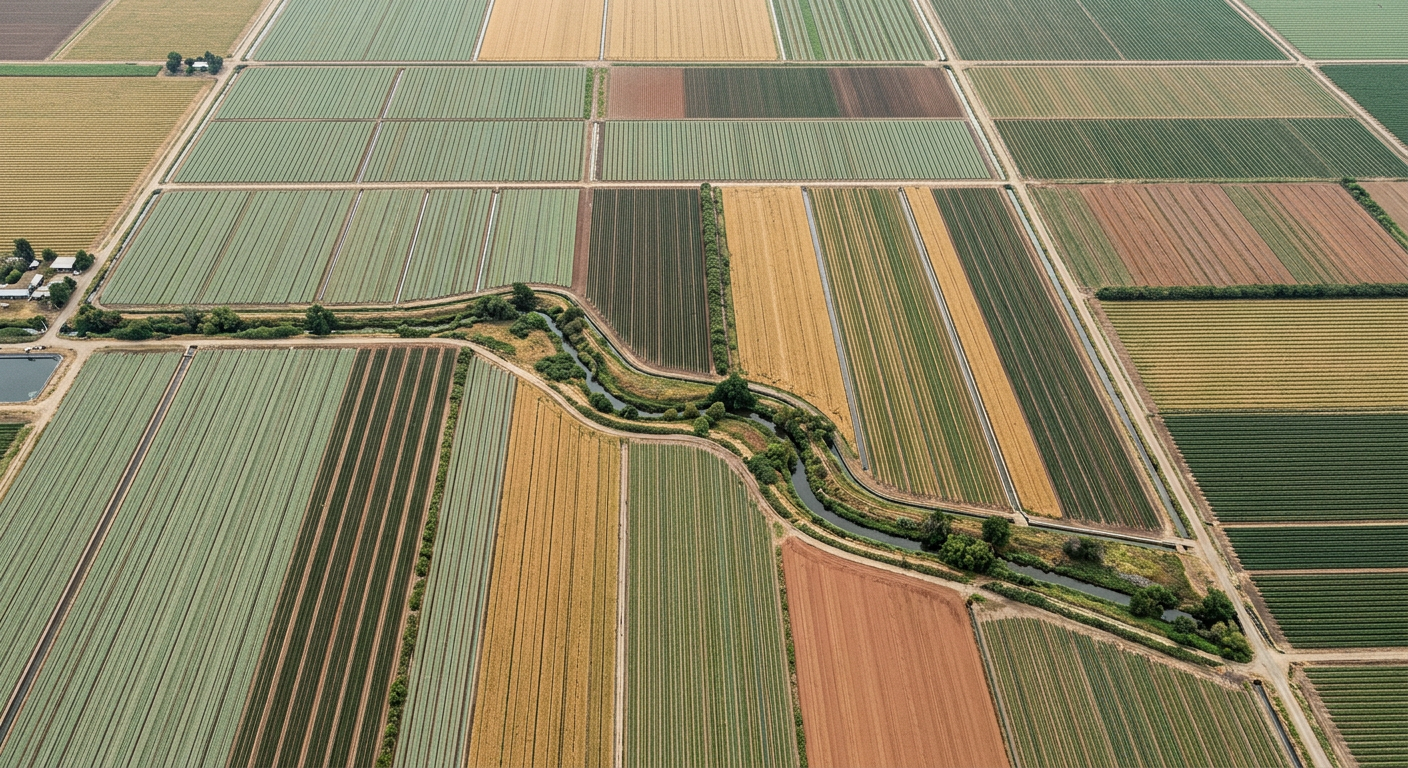
The cheapest contamination to remove is the contamination that never enters the water. A catchment is the land that drains into a reservoir, river or aquifer. What happens on that land, from farming and sewage discharges to industry, roads and wildfires, shapes what arrives at the intake.
Source protection is therefore the first barrier. It can mean controlling land use near reservoirs, managing livestock access to streams, sealing wellheads and planning around seasonal changes in water quality. WHO’s guidance treats the catchment as part of the supply system, not as somebody else’s concern, and its updated water safety plan manual adds explicit attention to climate risks such as heavier rainfall and drought.[1],[2]
Step two: intake and the raw water
Raw water is drawn in through an intake: a structure in a river or reservoir, or a borehole into an aquifer. Its quality is rarely constant. After heavy rain, rivers can carry more soil, organic matter and microorganisms. In warm, still conditions, algae and cyanobacteria can bloom in reservoirs.
Some cyanobacteria produce toxins, and WHO’s 2022 update to its guidelines added a framework of alert levels to help suppliers recognise and respond to blooms early. The practical point is that treatment plants are not set once and left alone. Operators adjust treatment as the raw water changes.[1]
Step three: making particles settle
Much of what makes surface water unsafe is attached to particles too small to settle by themselves. Treatment therefore often begins with coagulation: a chemical such as an aluminium or iron salt is added and mixed rapidly. It neutralises the electrical charges that keep fine particles apart.
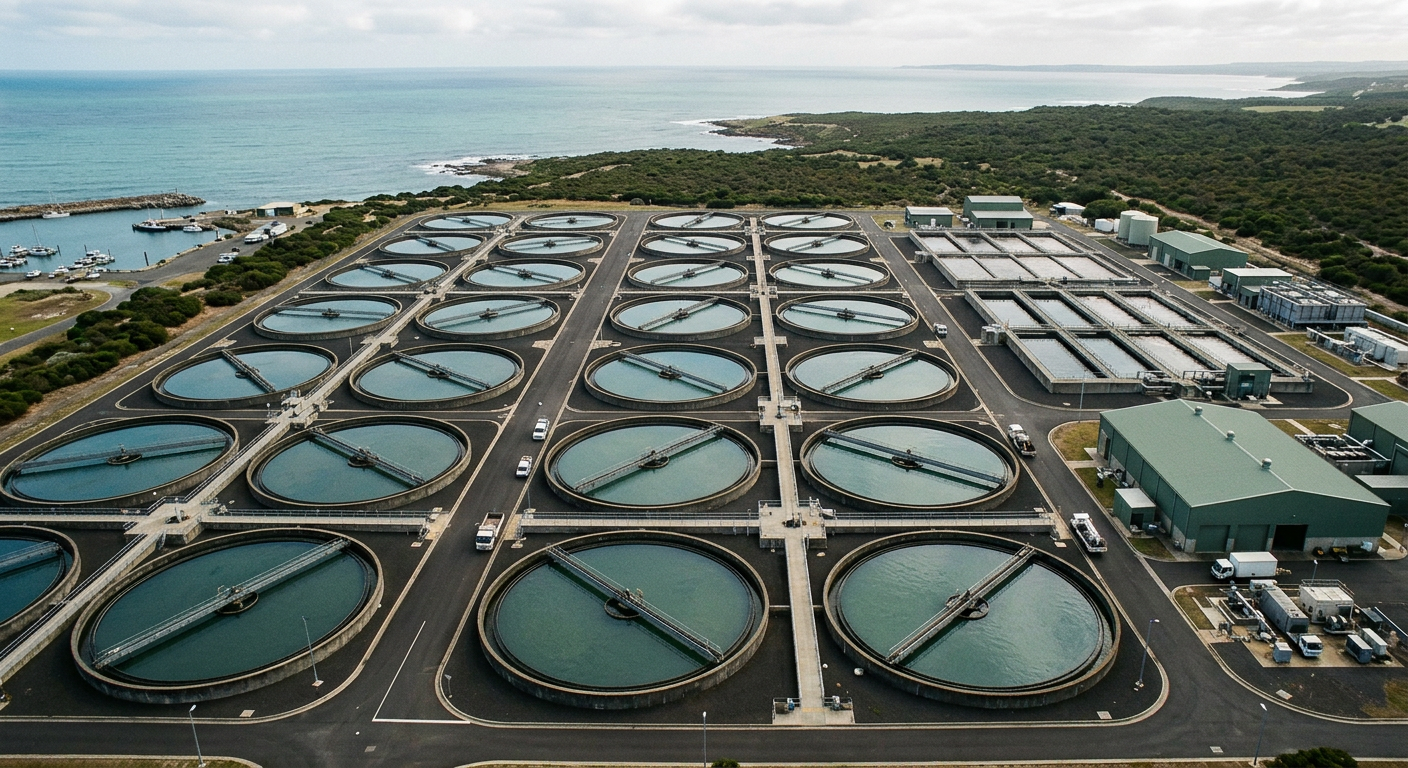
Flocculation follows. The water is stirred gently so the destabilised particles collide and clump into larger, heavier flocs. In sedimentation basins, often the large circular or rectangular tanks visible from the air, the water moves slowly enough for those flocs to sink. Clearer water is drawn off the top; the settled sludge is removed for disposal.
Not every supply needs all of these steps. Well-protected groundwater may require little more than disinfection. Turbid river water typically needs the full sequence. Choosing the right combination is one of the decisions a water safety plan is meant to justify.
Step four: filtration
The settled water then passes through filters, commonly beds of sand, sometimes layered with anthracite or other media. Filtration removes remaining particles, including some microorganisms that are hard to kill with chemicals. Filters gradually clog and are cleaned by backwashing: reversing the flow to flush out trapped material.[1]
Turbidity, the cloudiness caused by suspended particles, is one of the most closely watched measurements in a treatment plant. It matters beyond appearance. Particles can shield microorganisms from disinfectants, so a rise in turbidity after filtration is an early sign that a barrier may be failing. WHO has published a dedicated review of turbidity because of its value as an operational signal.[5],[1]
The 1993 outbreak in Milwaukee, in the United States, shows what happens when this barrier weakens. Cryptosporidium, a parasite that resists chlorine, passed through one of the city’s treatment plants during a period of increased turbidity in the treated water. Researchers writing in the New England Journal of Medicine estimated that about 403,000 people became ill, the largest documented waterborne outbreak in US history.[6]
Step five: disinfection
Disinfection inactivates pathogens that survive the earlier stages. Chlorine is the most widely used disinfectant; others include chloramine, ozone and ultraviolet light. Effectiveness depends on the dose, the contact time, the temperature and the pH of the water, and on how clean the water already is.[1]
No disinfectant works equally well against everything. Chlorine is very effective against most bacteria and viruses but much less effective against protozoa such as Cryptosporidium, which is why filtration and disinfection work as partners rather than substitutes. Disinfection also creates by-products when chemicals react with natural organic matter. WHO’s guidance is clear about priorities: the risks from by-products are small compared with the risks of inadequate disinfection, and disinfection should not be compromised to control them.[1]
Step six: storage
Treated water usually goes into storage before it reaches homes: covered reservoirs, tanks and water towers. Storage balances steady treatment against uneven demand, which peaks in the morning and evening, and it keeps water available during power cuts, repairs and firefighting.
Storage is also a vulnerability. Tanks must be sealed against birds, animals and rainwater, inspected and cleaned. Water that sits too long can lose its disinfectant protection, so engineers try to keep it moving.
Step seven: distribution and pressure
The distribution network is the longest and least visible part of the system: thousands of kilometres of mains in a large city, plus service pipes to each building. It is also where treated water spends the most time, and where it is most exposed.
Pressure is a safety feature, not just a convenience. A pressurised pipe pushes water outward through any small crack. When pressure drops, because of a burst main, intermittent supply or heavy demand, contaminated groundwater or sewage can be drawn in through leaks and faulty connections. WHO’s guidelines identify maintaining positive pressure and preventing backflow and cross-connections as key controls in piped systems.[1]
Many utilities therefore keep a small residual of disinfectant in the water as it travels. That residual offers limited protection against minor contamination, and changes in it act as a warning: a sudden loss of residual somewhere in the network can indicate that something has entered the pipes.[1]
Chemistry matters in distribution too. Water reacts with the pipes it flows through. In Flint, Michigan, a switch of water source in 2014 without adequate corrosion control allowed lead to leach from old pipes. A study in the American Journal of Public Health found that the proportion of young children with elevated blood lead levels rose significantly after the switch. The treatment plant was not the only point of failure; the chemistry of the whole network was.[7]
Monitoring: watching the controls, not just the water
It might seem that safety comes from testing tap water. Testing matters, but WHO’s framework distinguishes between two kinds of monitoring. Operational monitoring tracks the controls themselves, such as turbidity after filtration, disinfectant dose and residual, and pressure, often continuously, so operators can act within minutes or hours. Verification monitoring, including sampling for indicator bacteria such as E. coli, confirms after the fact that the system as a whole is working.[1],[2]
The distinction explains why end-of-pipe testing alone cannot guarantee safety. Laboratory results for bacteria can take a day or more, and by the time contaminated water is detected at a tap it may already have been drunk. Watching the barriers lets problems be caught upstream.
Maintenance and the long view
Most of a water system is built to last for decades, and much of its risk comes from age: corroding mains, leaking joints, worn pumps and valves, and records that no longer match what is underground. WHO’s water safety plan manual treats maintenance, staff training and incident procedures as part of water safety rather than separate from it, and asks suppliers to review their plans regularly and after every incident.[2]
That is why safe water depends as much on people and routines as on equipment: operators adjusting coagulant dose after a storm, crews repairing a burst main and flushing the pipe before reconnection, technicians calibrating sensors, and managers deciding which ageing pipes to replace first.
A chain, not a machine
Looking at the whole sequence, a pattern emerges. Failures rarely come from a single stage collapsing. They come from weaknesses lining up: a storm raising turbidity at the same time as a filter underperforms, or a pressure drop in a pipe that already has a leak near a sewer. The multiple-barrier approach exists precisely because no single step is perfect.[1]
This also explains why the gap in global access is not closed simply by building treatment plants. A plant without protected sources, reliable power, continuous pressure, trained staff and monitoring can deliver water that is safe when it leaves and unsafe by the time it arrives.
It also explains why water systems need sustained attention rather than one-off investment. Pipes age, catchments change, populations grow and staff retire. A network that was safe twenty years ago is not automatically safe today, and the work of inspecting, repairing, testing and replacing has to continue for as long as people depend on the tap.
The glass of water at the end of the chain is the visible result of a great many invisible decisions. When the system works, it is easy to forget it exists. Understanding the chain is a way of noticing what it takes to keep it working.
Sources & Further Reading
- 1.Guidelines for drinking-water quality: fourth edition incorporating the first and second addenda(opens in a new tab)
World Health Organization, 2022
- 2.Water safety plan manual: step-by-step risk management for drinking-water suppliers, second edition(opens in a new tab)
World Health Organization, 2023
- 3.Progress on household drinking water and sanitation 2000–2024: special focus on inequalities(opens in a new tab)
WHO/UNICEF Joint Monitoring Programme for Water Supply, Sanitation and Hygiene
- 4.Drinking-water (fact sheet)(opens in a new tab)
World Health Organization, 2023
- 5.Water quality and health: review of turbidity(opens in a new tab)
World Health Organization, 2017
- 6.A massive outbreak in Milwaukee of Cryptosporidium infection transmitted through the public water supply(opens in a new tab)
The New England Journal of Medicine, 1994
- 7.
- Content type
- Explainer
- Author
- It’s Important
- Published
- Reviewed
- Editorial basis
- Research-based editorial
Filed under Environment topic · Water system · Cities system
Spotted an error? Report it to us.