

Why Cholera Still Exists
Cholera is preventable and usually easy to treat. It persists not because medicine lacks answers, but because the water, sanitation and health systems that deliver those answers are still absent, damaged or out of reach for millions of people.
It’s Important
Current context · as of
WHO’s latest annual figures, reflected in its cholera fact sheet of 29 September 2026, cover calendar year 2025: 47 countries reported 451,499 cases and 7,870 deaths, the highest number of reported deaths since 1999. Seven countries reported more than 10,000 cases (Yemen, South Sudan, Sudan, the Democratic Republic of the Congo, Angola, Nigeria and Bangladesh) and together accounted for 89% of reported cases. Reported figures undercount the true burden and change as countries report; the rest of this explainer focuses on why cholera keeps recurring.[1],[2]
Cholera is one of the best-understood diseases in public health. Its cause has been known for well over a century. It can be prevented with safe water and sanitation, and most people who get sick can be treated with a solution of water, salts and sugar. Yet in 2025 more cholera deaths were reported to WHO than in any year since 1999.
That contradiction is the subject of this explainer. Cholera persists not because humanity does not know how to prevent it, but because the systems required to prevent it are still absent, damaged or inaccessible for millions of people. Biologically, cholera is an infectious disease. Operationally, it is very often a sign that water, sanitation and health services have failed somewhere upstream of the patient.[1]
Cholera is an infrastructure disease
Cholera is caused by the bacterium Vibrio cholerae. Only two serogroups, O1 and O139, cause outbreaks, and O1 has caused all recent ones. People are infected by swallowing food or water contaminated with the bacteria, which are shed in the faeces of infected people.[1]
Two features make outbreaks grow fast. Symptoms appear between 12 hours and 5 days after infection, so case numbers can climb within days. And most infected people have no symptoms at all, yet can still shed the bacteria for 1 to 10 days. Where faeces can reach drinking water, a small number of infections can seed a much larger outbreak before anyone has been diagnosed.[1],[11]
Cholera is also specific. It is one cause of acute watery diarrhoea among many, and it is distinct from dysentery and from other waterborne infections. It is not shorthand for every disease linked to unsafe water. What it shares with them is the route: wherever human waste and drinking water are not kept apart, cholera has an opening. Transmission does not always follow a single pathway. Contaminated food, household water stored in open containers and environmental reservoirs all play a part. But the common thread is a gap in the systems that keep faeces out of what people eat and drink.
The treatment is simple. Access is not
Medically, cholera is an easily treatable disease. Most patients have mild or moderate symptoms and can be treated successfully with prompt oral rehydration solution (ORS). People who become severely dehydrated need rapid intravenous fluids, and they also receive ORS and antibiotics. WHO’s benchmark is that the case fatality rate in treatment centres should remain below 1%.[1]
The difficulty is time. Severe cholera can kill within hours if untreated. Whether someone survives often depends less on the medicine than on whether they can reach it: an oral rehydration point in their neighbourhood, a treatment centre with fluids and staff, transport to get there and a referral system for the sickest patients. WHO stresses that community access to ORS is essential during an outbreak.[1]
Where people die matters. In Haiti in 2025, 19 of the 65 reported cholera deaths, or 29%, occurred in the community rather than in a health facility. Deaths outside facilities are a measure of distance, cost, insecurity and late recognition. They are failures of access, not of medical knowledge.[2]
This article describes how treatment systems work. It is not clinical guidance, and it does not give treatment instructions.
Safe water changes everything
Having access to water is not the same as having access to safe water. Global monitoring by WHO and UNICEF distinguishes between basic services and “safely managed” drinking water: water from a source on the premises, available when needed and free from contamination. By that standard, 2.1 billion people, about 1 in 4 people worldwide, still lacked safely managed drinking water in 2024, including 106 million who drank directly from untreated surface sources.[3],[4]
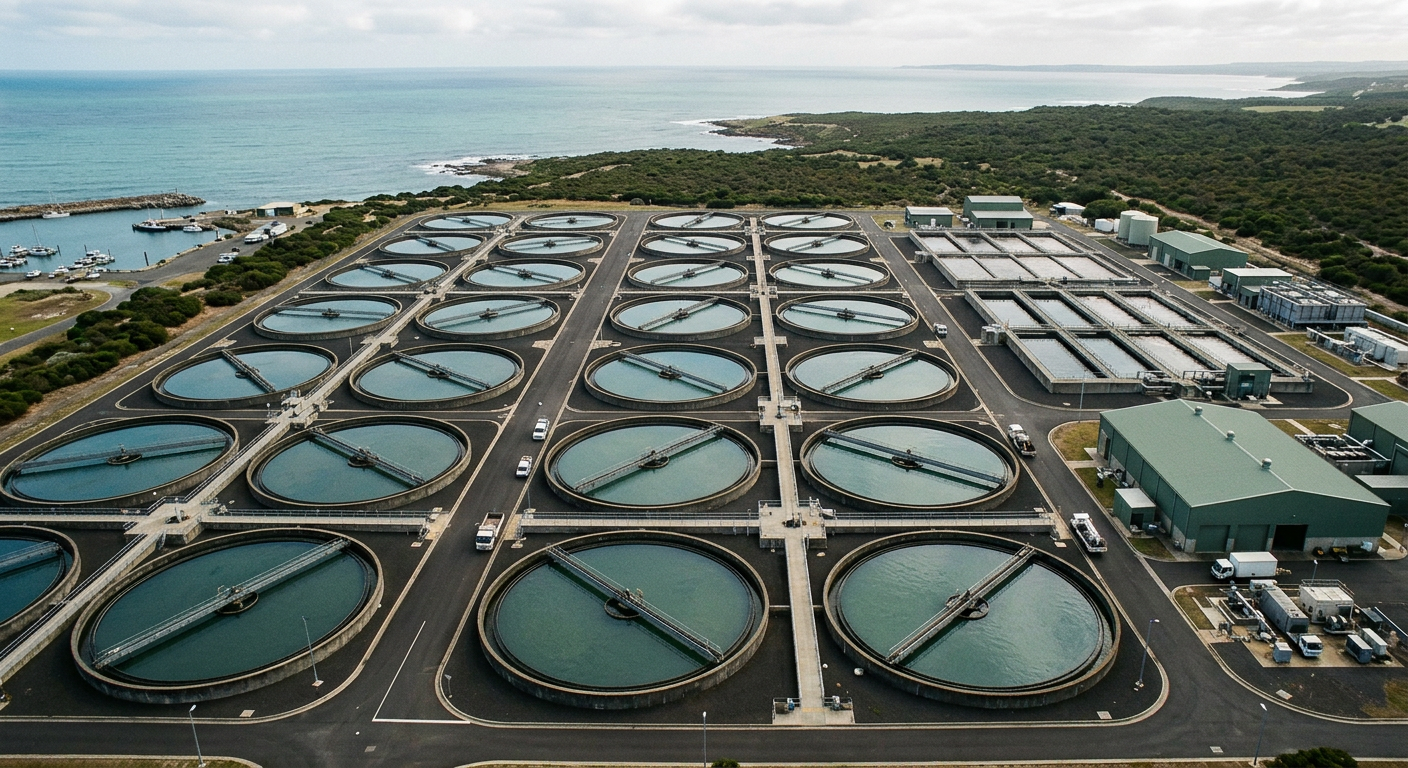
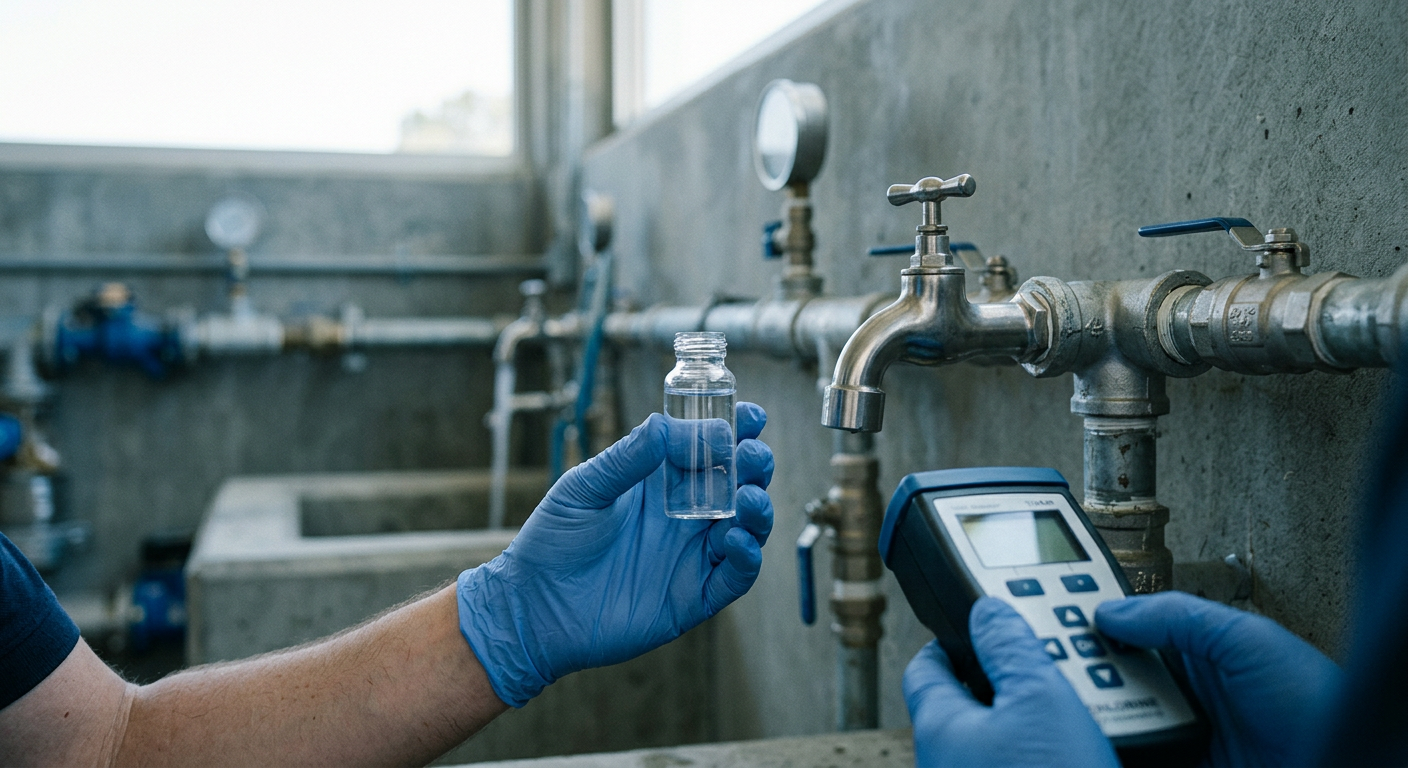
Safety is a chain, and it can break at any link. A source must be protected from contamination. Water must be treated, usually with chlorination, which leaves a residual disinfectant that keeps working in the pipes. The distribution network must hold pressure, because a pipe that runs dry can draw in contaminated groundwater through leaks. And where water is collected and carried home, it can be contaminated during transport and storage even if it was clean at the tap.
That is why responses work at two levels. Municipal systems such as treatment plants, chlorination and maintained networks protect whole populations at once. Household measures such as treatment tablets, safe storage containers and point-of-use filters fill the gap where those systems do not reach. Household measures matter, but they move the burden of safety onto the people with the least support.
Toilets are public-health infrastructure
Sanitation is the other half of the chain. In 2024, 3.4 billion people lacked safely managed sanitation, meaning toilets from which waste is treated and disposed of safely, and 354 million people had no toilet at all.[3]
A toilet protects the people who use it, but it also protects everyone downstream. Waste that is not contained and treated, whether from an overflowing pit latrine, a blocked sewer or a drainage channel that floods, can reach the water that someone else drinks. In that sense sanitation is shared infrastructure, closer to a road or a power grid than to a personal habit.
WHO places the long-term solution for cholera control in economic development and universal access to safe drinking water, basic sanitation and good hygiene. Hygiene advice matters, but it depends on infrastructure: handwashing is only possible where there is water and soap. In 2024, 1.7 billion people lacked basic hygiene services at home.[1],[3]
Cities can grow faster than their water systems
It is tempting to treat cholera as a rural problem. The evidence is more complicated. In WHO and UNICEF’s latest monitoring, drinking-water and hygiene coverage in urban areas stagnated between 2015 and 2024, while rural areas improved.[3]
Cities expand through informal settlements faster than utilities can extend pipes and sewers. Piped supply may arrive for a few hours a day, and every time pressure drops the network becomes more vulnerable to contamination. Households fill the gaps with tanker water, vendors and shared standpipes, often paying more per litre than connected neighbourhoods. Dense housing, limited drainage and sewer networks that cover only part of a city all raise the stakes. A review of drought-related cholera in Africa identifies the expansion of informal urban settlements among the mechanisms that turned water stress into outbreaks.[13]
This is why a city can contain advanced hospitals and still have neighbourhoods where cholera can spread. The risk lies in the gaps between neighbourhoods, in who is connected to the network and who is not, rather than in the city as a whole.
Conflict turns infrastructure failure into an outbreak
WHO lists conflict and population displacement among the main reasons people lose access to safe water and sanitation. War damages treatment plants and pipes, cuts the electricity that pumps need, interrupts waste collection and drives people into overcrowded camps where facilities are quickly overwhelmed. Health workers leave, supply chains break and surveillance goes quiet just when it is most needed.[1]
The pattern is visible in the data. Of the seven countries that each reported more than 10,000 cases in 2025, several (Yemen, Sudan, South Sudan and the Democratic Republic of the Congo) have been living through prolonged conflict or complex emergencies. Measured per head of population, South Sudan, Yemen and Sudan recorded the highest national attack rates that year. In fragile contexts, coverage of safely managed drinking water is 38 percentage points lower than in other countries.[2],[3]
None of this is inherent to the places involved. Many of the affected cities had working water systems before conflict damaged them. What conflict does is remove, one by one, the layers of protection that normally keep a single infection from becoming an epidemic.
Climate can make a bad system worse
Climate and weather do not cause cholera on their own. What they can do is increase risk where water and sanitation systems are already vulnerable, and the mechanisms differ.
Floods are the most direct. They can overwhelm latrines and sewers, contaminate wells and damage water infrastructure. In early 2026, Mozambique began a preventive vaccination campaign amid an ongoing cholera outbreak and the aftermath of floods that had affected more than 700,000 people, displaced many and damaged water systems. Cyclones can have similar effects.[5],[1]
Drought works through scarcity. When usual sources fail, people may have to turn to less safe ones, store water for longer or move. A review of drought-related outbreaks in Africa found mechanisms including poor water access, the marginalisation of refugees and nomadic populations and the growth of informal settlements. It also notes that future drought projections are highly uncertain and likely to vary from place to place.[13]
The evidence calls for caution. A register-based study of sub-Saharan Africa from 1990 to 2010 found that floods and droughts were associated with an increased risk of cholera outbreaks, but most outbreaks began during periods without either. Weather can tip a system over, but it is rarely the whole explanation.[12]
There is also an ecological dimension. Vibrio cholerae lives naturally in brackish and coastal waters, where its abundance is shaped by water temperature, salinity and plankton, all of which respond to wider climate variability. Researchers have proposed using remotely sensed sea-surface temperature and plankton blooms to anticipate risk in some settings. Ecological suitability is not the same as an outbreak, though: whether bacteria in the environment reach people still depends on water and sanitation systems.[14]
Vaccines help, but they are not a substitute for water systems
Oral cholera vaccines are safe and effective for people over one year of age. One dose provides short-term protection for at least 6 months and can help bring outbreaks under control. Two doses provide longer protection, for about 3 years. They are used in two ways: reactively, to slow an outbreak that has started, and preventively, in places at persistent risk.[5],[1],[7]
For several years, supply was the binding constraint. In October 2022, faced with a global shortage as outbreaks multiplied, the international coordinating group that manages the emergency stockpile temporarily suspended the standard two-dose strategy in favour of a single dose, so that limited stocks could reach more people. Preventive campaigns stopped altogether.[6]
That situation has improved, but not resolved. On 4 February 2026, WHO, UNICEF and Gavi announced that supply had grown enough to resume preventive vaccination for the first time in over three years, starting with an allocation of 20 million doses for Mozambique, the Democratic Republic of the Congo and Bangladesh. They reported annual supply roughly doubling from 35 million doses in 2022 to nearly 70 million in 2025; WHO’s later fact sheet gives a figure of about 80 million doses for 2025. A single manufacturer, EuBiologics, was producing cholera vaccine at the scale needed for mass campaigns. The single-dose strategy remains the standard for outbreak response, with two doses considered case by case, and WHO notes that concurrent outbreaks continue to put pressure on supply.[5],[1]
Vaccination buys time. It does not provide safe water, sanitation, surveillance or treatment, and its protection fades. As WHO, UNICEF and Gavi put it when preventive vaccination resumed, long-term investment in water, sanitation and hygiene remains essential to stop outbreaks from starting.[5]
Surveillance decides how early a response starts
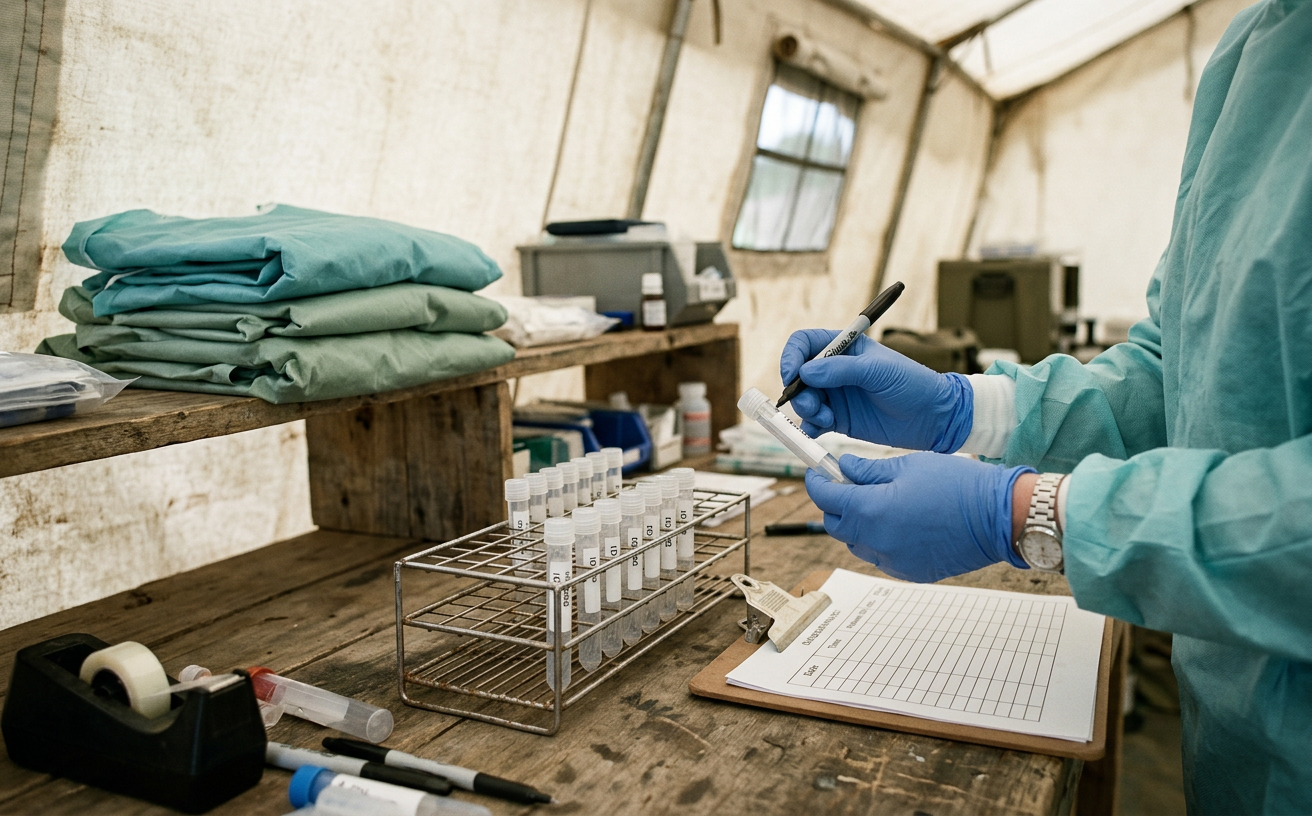
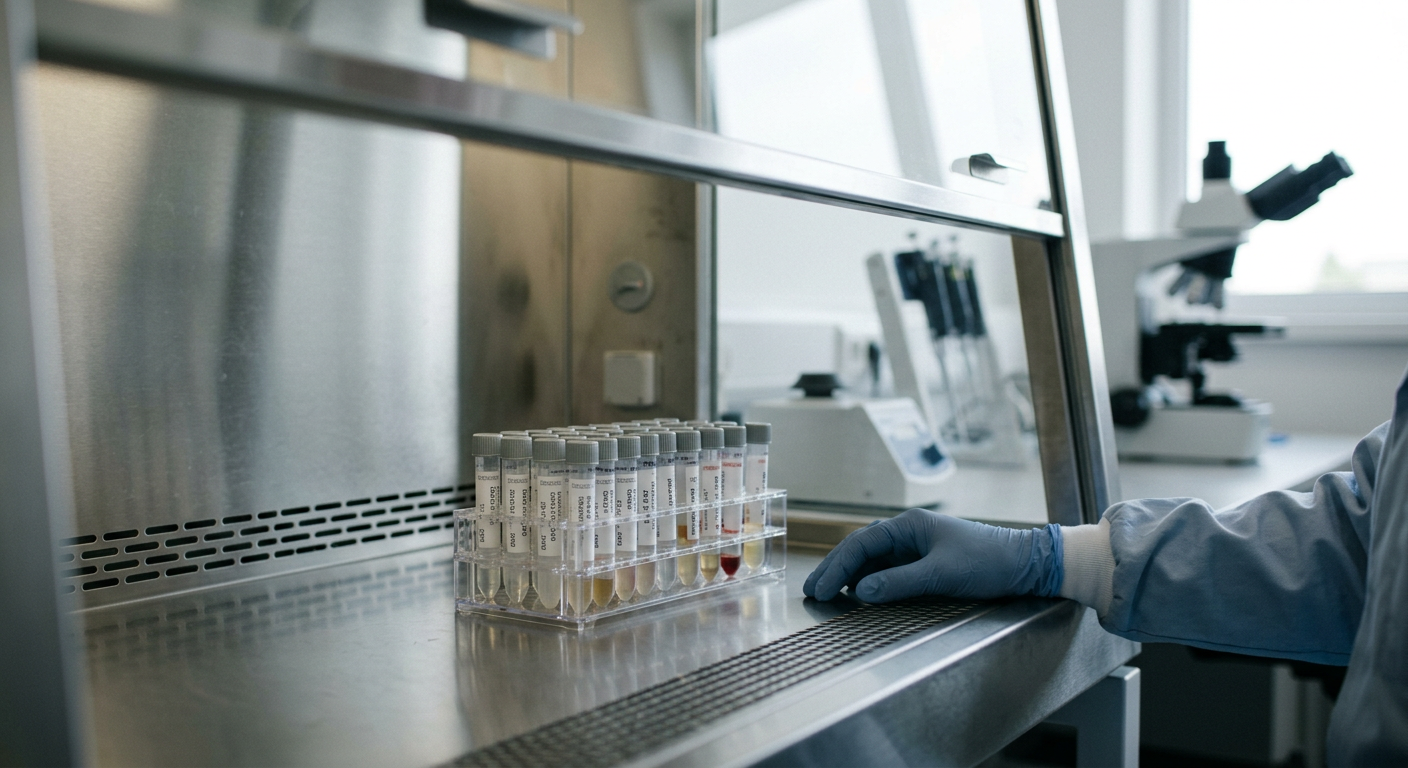
A cholera response can only start once someone has noticed the outbreak. Surveillance begins with suspected cases, people with acute watery diarrhoea who meet a case definition, reported quickly from clinics and communities. Rapid diagnostic tests can flag a probable outbreak early, but confirmation requires laboratory testing by culture, seroagglutination or PCR. WHO recommends that cholera surveillance sit within a country’s integrated disease surveillance system, with timely reporting and data shared from local to global level.[1],[9]
Surveillance also shows where cholera keeps returning. The GTFCC strategy concentrates effort on “priority areas for multisectoral interventions”: the relatively small areas most heavily affected by cholera, where water, sanitation, health and vaccination investments can be targeted together. Response guidance emphasises reaching the households and neighbourhoods around new cases quickly, with treatment, water treatment, hygiene support and, where available, vaccination.[1],[10]
Every gap in that chain adds days. Under-reporting is common: WHO notes that reported figures fall well below the burden estimated by researchers, partly because of weak surveillance and partly because outbreaks may go unrecorded for fear of the effect on trade and tourism. As with Ebola and COVID-19, the lesson is the same: a system that cannot see a problem early will always meet it larger.[1]
Why cholera keeps coming back to the same places
In some countries cholera outbreaks occur regularly; in others years pass between them. The places it returns to share structural conditions rather than a geography: water and sanitation systems that were never extended or have not been maintained, health services that are thin or interrupted, and populations exposed to conflict, displacement, floods or drought. WHO names the lack of investment in maintaining and improving water, sanitation and hygiene services as one of the root causes.[1]
The scale of the gap is not evenly spread. People in the least developed countries are more than twice as likely to lack basic drinking water and sanitation as people elsewhere. Researchers estimate between 1.3 and 4.0 million cholera cases and 21,000 to 143,000 deaths worldwide each year, several times the number reported.[3],[1]
Seen this way, vulnerability is produced by systems, not by geography alone. A neighbourhood is vulnerable because its pipes are intermittent, its drainage floods, its clinic is a long journey away and its surveillance reports late. Each of those is a decision about investment, maintenance and governance, and each can be changed.
What elimination would actually require
The global strategy is explicit about the target. In 2017 the Global Task Force on Cholera Control published Ending Cholera: A Global Roadmap to 2030, endorsed by the World Health Assembly in 2018. It aims to reduce cholera deaths by 90% and eliminate cholera in as many as 20 countries by 2030. It rests on early detection and rapid multisectoral response, a focus on the priority areas where cholera concentrates, and effective coordination of technical support, advocacy and financing.[8],[1]
With 2030 approaching and reported deaths at their highest in over 25 years, the roadmap is a measure of how far there is to go. The 2030 Sustainable Development Goal targets for water and sanitation are under similar strain: WHO and UNICEF say ending open defecation and reaching universal basic services will need acceleration, and universal safely managed services appear increasingly out of reach.[1],[3]
Elimination would not come from a breakthrough drug or vaccine. It would come from ordinary, sustained infrastructure: universal safe water and sanitation, surveillance that sees outbreaks early, treatment close to where people live, vaccines used to buy time, communities involved in planning the response, and maintenance budgets that do not disappear once an outbreak ends. All of it depends on political and financial commitment that lasts longer than an emergency.
Cholera survives in the gap between what public health knows and what infrastructure delivers. Closing that gap is less a medical problem than a question of building, repairing and maintaining the systems that people depend on, everywhere.
This article is for general informational and editorial purposes and is not medical advice. For guidance about your own health, or about an outbreak where you are, consult a health professional or your national public-health authority.
Sources & Further Reading
- 1.Cholera (fact sheet)(opens in a new tab)
World Health Organization, 2026
- 2.
- 3.1 in 4 people globally still lack access to safe drinking water – WHO, UNICEF(opens in a new tab)
World Health Organization, 2025
- 4.Progress on household drinking water and sanitation 2000–2024: special focus on inequalities(opens in a new tab)
WHO/UNICEF Joint Monitoring Programme for Water Supply, Sanitation and Hygiene
- 5.Preventive cholera vaccination resumes as global supply reaches critical milestone(opens in a new tab)
World Health Organization, 2026
- 6.Shortage of cholera vaccines leads to temporary suspension of two-dose strategy, as cases rise worldwide(opens in a new tab)
World Health Organization, 2022
- 7.Cholera vaccines: WHO position paper – August 2017(opens in a new tab)
World Health Organization
- 8.Ending Cholera: A Global Roadmap to 2030(opens in a new tab)
Global Task Force on Cholera Control
- 9.Public health surveillance for cholera: guidance document(opens in a new tab)
Global Task Force on Cholera Control
- 10.GTFCC Cholera Outbreak Response Field Manual(opens in a new tab)
Global Task Force on Cholera Control
- 11.The incubation period of cholera: a systematic review (Journal of Infection)(opens in a new tab)
Azman AS, Rudolph KE, Cummings DA, Lessler J
- 12.
- 13.
- 14.
- Content type
- Explainer
- Author
- It’s Important
- Published
- Reviewed
- Editorial basis
- Research-based editorial
Filed under Health topic · Global Health collection · Water system · Cities system
Spotted an error? Report it to us.