

COVID-19: What Changed — And What Didn’t
Several years on, the evidence is clearer. COVID-19 left behind faster vaccine platforms, genomic and wastewater surveillance and a better grasp of indoor air. It also left most of the weaknesses that made it so damaging.
It’s Important
Where things stand: on 5 May 2023, WHO’s Director-General determined that COVID-19 was “an established and ongoing health issue” that no longer constituted a public health emergency of international concern. SARS-CoV-2 continues to circulate worldwide, and COVID-19 remains an ongoing health burden.[1],[2]
Two stories about COVID-19 are easy to tell, and both are wrong. One says nothing changed: the world was caught unprepared, learned nothing and has gone back to normal. The other says the world is now ready: vaccines can be made in months, surveillance is everywhere and the next pandemic will be handled better.
The evidence supports something less tidy. COVID-19 changed medicine, surveillance, vaccine technology, public understanding of disease and the way institutions plan for emergencies, in ways that are likely to last. Many of the vulnerabilities that made the pandemic so damaging remain: unequal access to medical tools, fragile health systems, workforce shortages, eroded trust, dependence on concentrated supply chains and inconsistent international coordination. This analysis looks at both sides, one system at a time.
The emergency ended. The virus did not
Three different things are often blurred together. The first is a legal and institutional status: the public health emergency of international concern (PHEIC) that WHO declared under the International Health Regulations in January 2020. The second is the disease itself. The third is the way governments respond to it. The May 2023 decision ended the first. It did not end the second, and it changed the third, from emergency response to the longer-term management used for other established respiratory diseases. In WHO’s own wording, COVID-19 became an established and ongoing health issue.[1]
This is why COVID-19 should not be described casually as “over”. It now sits alongside influenza and respiratory syncytial virus (RSV) as part of the regular respiratory-disease landscape. That landscape is harder to read than it was in 2021. Many countries scaled back testing and reporting after the emergency phase, so the case and death figures on WHO’s dashboard reflect reporting practice as much as transmission, and they are not directly comparable across countries or across years. For that reason this article does not rely on current case counts.[2]
Reported figures also understated the toll at the time. WHO estimated that excess mortality associated directly or indirectly with the pandemic was approximately 14.9 million deaths in 2020 and 2021 (range 13.3 million to 16.6 million), far more than official COVID-19 death reports. Other modelling groups produced somewhat different totals; estimates vary with method, but all point well above the reported count. Excess mortality, which compares deaths against what would have been expected, gives a fairer picture than reported deaths in places where testing and death registration were weak.[3],[12]
Vaccine technology moved much faster
The first mRNA vaccines authorised in late 2020 are sometimes described as having been invented in months. They were not. Messenger RNA had been studied as a vaccine and therapeutic platform for decades, and by 2018 reviewers were describing mRNA vaccines as a promising new era in vaccinology, with candidates in clinical trials for infectious diseases and cancer. The obstacles were practical: unmodified mRNA provoked unwanted inflammation, it was unstable, and it needed a delivery system to get into cells.[4]
Much of that groundwork was recognised by the 2023 Nobel Prize in Physiology or Medicine, awarded to Katalin Karikó and Drew Weissman for discoveries about nucleoside base modifications that made effective mRNA vaccines against COVID-19 possible. Their key findings date from the mid-2000s. What COVID-19 supplied was not the science but extraordinary acceleration: public and private funding at once, very large trials that recruited quickly because the virus was spreading so widely, manufacturing built at risk before results were known, and regulators reviewing data on a rolling basis as it arrived. Trial phases were overlapped and run in parallel, not skipped.[5]
mRNA was not the only platform. Viral-vector vaccines and protein-based vaccines were also deployed at scale and carried a large share of global supply, particularly in lower-income countries. The lasting change is a set of platforms with real-world manufacturing and regulatory experience behind them, and a routine of updating vaccine composition as the virus evolves, much as is done for influenza.
Realism matters here. A platform shortens some steps, such as designing a new candidate, but not the work of proving that a vaccine is safe and effective, producing it in quantity and delivering it. COVID-19 vaccines were very effective against severe disease but less durable against infection, and mRNA is not a universal answer to diseases for which no protective immune response is yet understood.
Genomic surveillance became public-health infrastructure
Before 2020, sequencing a pathogen’s genome was mostly a research activity or a tool for specific investigations. During the pandemic it became routine public-health work. Sequencing let countries identify new variants, track how they spread, link clusters of cases and decide when vaccines needed updating. Sequences shared through international databases allowed scientists in other countries to assess a new variant within days.
WHO’s global genomic surveillance strategy, published in March 2022, set out to turn that emergency capacity into a lasting system for pathogens with pandemic and epidemic potential, covering the decade to 2032. WHO has since convened the International Pathogen Surveillance Network to connect public-health genomics actors and widen access. The machines, laboratory workflows and data pipelines built for SARS-CoV-2 are being reused for influenza, RSV and other emerging pathogens, and in some places for tracking antimicrobial resistance.[6],[7]
The gains are uneven. Sequencing needs equipment, reagents, trained bioinformaticians and stable funding. During the pandemic a small number of countries generated most of the world’s sequences, and the gap between well-resourced and under-resourced surveillance systems has not closed. A variant can only be detected where someone is looking for it.
Wastewater became an early-warning system
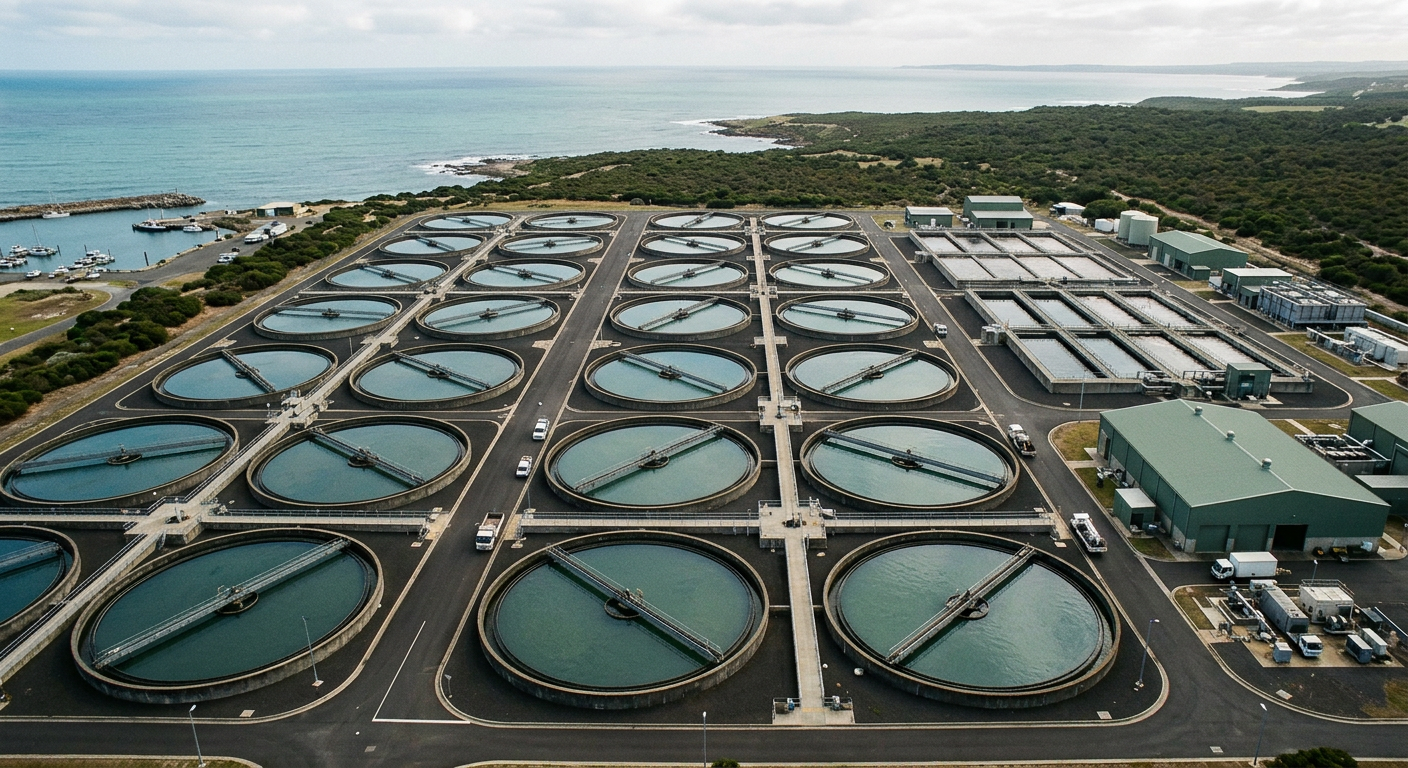
People infected with SARS-CoV-2 shed fragments of the virus’s genetic material in their faeces, often before or without symptoms. Sampling sewage at a treatment plant therefore measures a whole community at once, without anyone having to seek a test. Wastewater signals do not depend on who has access to testing or chooses to report a result, which made them increasingly valuable as individual testing declined.
The idea was not new. Environmental surveillance had long been used to detect poliovirus. COVID-19 turned it into a widespread programme. WHO issued interim guidance in April 2022 on using environmental surveillance in wastewater to complement, not replace, conventional surveillance. In the United States, the CDC’s National Wastewater Surveillance System was established during the pandemic and has since extended monitoring to other pathogens.[8],[9]
The limits are real. Wastewater reveals trends, not individual cases. Concentrations are affected by rainfall, industrial discharge and population movement. Communities without sewer systems, which include much of the world, are missed unless other environmental sampling is used. Used well, wastewater is a cheap and early signal that something is changing; it tells health authorities where to look, not what to do.
We learned more about the air we share
Early in 2020, much of the official guidance emphasised large droplets that fall quickly and contaminated surfaces. Over the following years, outbreak investigations, laboratory studies and modelling built a stronger case that the virus also spreads through smaller particles that can stay suspended and accumulate indoors, especially in crowded, poorly ventilated rooms. The shift was gradual, contested and driven by evidence, not settled on a single day.
In 2024, WHO published a consultation report on terminology for pathogens that transmit through the air. It used the umbrella term “infectious respiratory particles” for particles of all sizes and described transmission through the air at short and longer range, moving away from a strict split between “droplet” and “airborne” spread. This does not mean that every respiratory infection spreads the same way or that everything is airborne. It means the size of a particle is a spectrum, and the air of a shared room matters.[10]
The practical consequence is that buildings are part of public health. WHO’s 2021 ventilation roadmap set out how to assess and improve indoor ventilation in health care, homes and public settings. Bringing in outdoor air, filtering recirculated air, monitoring carbon dioxide as a rough proxy for ventilation, and reducing crowding all lower the concentration of infectious particles without anyone having to change their behaviour each day.[11]
Some public-health researchers now argue that clean indoor air could eventually be treated like clean water: invisible infrastructure that reduces disease without constant individual action. That is a direction, not an accomplishment. Ventilation standards change slowly, upgrades cost money and most existing buildings were not designed with infection control in mind.
Hospitals learned that oxygen is infrastructure
Some of the pandemic’s most painful scenes were caused not by a missing drug but by missing oxygen. Medical oxygen is an essential medicine with no substitute, and COVID-19 raised demand sharply: the Lancet Global Health Commission on medical oxygen security estimated that an additional 52 million people needed oxygen to treat COVID-19 in 2021. In one study of intensive care units in sub-Saharan Africa cited by the Commission, 45% of patients who died of COVID-19 never received oxygen.[12]
The pandemic exposed this gap rather than creating it. Oxygen depends on a chain: production in plants or concentrators, cylinders and piping, transport, reliable electricity, spare parts, trained engineers and clinical staff who can measure oxygen saturation with a pulse oximeter and titrate therapy. Breaking any link breaks the service. Concentrators without maintenance end up in what engineers call device graveyards.
There was a real response. A taskforce under the Access to COVID-19 Tools Accelerator mobilised more than US$1 billion of oxygen equipment and supplies for over 100 low- and middle-income countries by the end of 2022, and in 2023 the World Health Assembly adopted a resolution on increasing access to medical oxygen. Yet the Commission, publishing in February 2025, found that more than 5 billion people still lack access to safe, affordable medical oxygen, that only about 30% of people in low- and middle-income countries who need oxygen for acute conditions receive adequate therapy, and that oxygen availability in health facilities had barely improved even after the pandemic. Fewer than 30 countries had national oxygen plans.[12]
Long COVID changed what “recovery” means
For most infectious diseases, public reporting has tended to treat outcomes as binary: people died or they recovered. COVID-19 forced a third category into view. A substantial number of people had symptoms that persisted or appeared after the acute infection, sometimes for years, affecting work, education and daily life.
WHO uses the term post COVID-19 condition, widely known as Long COVID. Its clinical definition describes symptoms that usually start within three months of the initial illness and last at least two months, and that cannot be explained by another diagnosis. Common symptoms include fatigue, breathlessness, muscle or joint pain, impaired sleep and difficulty thinking or concentrating. Some people develop postural orthostatic tachycardia syndrome, post-exertional malaise or myalgic encephalomyelitis/chronic fatigue syndrome. In 2024, the US National Academies proposed a broader definition of Long COVID as an infection-associated chronic condition.[13],[14]
How common Long COVID is remains uncertain, and no single figure is universally accepted. Estimates vary with the definition used, the population studied, the variant era, vaccination status, the length of follow-up and the methods of the study, including whether there is a comparison group of people who were not infected. One 2024 review in Nature Medicine estimated a cumulative global incidence of around 400 million people. That figure is a modelled estimate, not a count. Evidence suggests vaccination and infections in later variant periods carry a lower risk than the earliest waves, but the risk has not disappeared.[15]
There is still no proven cure. Care focuses on managing symptoms, rehabilitation tailored to each person and pacing for people with post-exertional malaise. Research into the underlying mechanisms and into treatments continues. Anyone with persistent symptoms should seek individual advice from a clinician.
Vaccine access exposed a system that still does not work fairly
When effective vaccines first arrived, demand far exceeded supply, and the countries that had financed development, pre-ordered large volumes and hosted manufacturing received doses first. Lower-income countries waited months longer. The question the pandemic posed is a systemic one: when the next scarce medical countermeasure appears, who gets it first?
COVAX, the global mechanism co-led by Gavi, WHO, CEPI and UNICEF, was the main attempt to answer it. By the time it closed on 31 December 2023 it had delivered nearly 2 billion doses to 146 economies, nearly 90% of them to lower-income economies, and Gavi estimates it averted around 2.7 million deaths in the lower-income economies it supported. For many of those countries it supplied most of their vaccine.[16]
COVAX also showed the limits of a mechanism that arrives with little money and no factories of its own. It had to compete for supply against countries buying directly, and its deliveries were hit by export restrictions in producing countries, especially in 2021. Behind that lay structural problems: manufacturing concentrated in a few regions, intellectual property and technology transfer that companies controlled, procurement power that followed purchasing power, and the cold-chain logistics and regulatory capacity needed to use doses once they arrived.
Some things have changed. Regional manufacturing initiatives are under way, notably in Africa, and the mRNA technology-transfer effort set up by WHO and partners aims to give manufacturers in low- and middle-income countries the know-how to produce vaccines themselves. Building a factory takes years, and a factory with no orders between emergencies struggles to survive. Whether these efforts become a durable regional supply is not yet settled.
Public trust became part of pandemic infrastructure
Measures such as testing, isolation, vaccination and ventilation only work if people take part. That depends on trust in institutions, and trust was tested from the start. Guidance changed as evidence emerged, which is how science should work, but each change could look like inconsistency to the public. Social media spread accurate information and false claims at the same speed. In many countries, health measures became markers of political identity.
It is tempting to blame misinformation alone. That explanation is incomplete. Trust is also built or lost through how institutions behave: whether they communicate clearly, are open about what they do not yet know, explain why advice changes, correct mistakes publicly and work through people communities already rely on, such as local clinicians, community health workers and faith leaders. Where those relationships existed before the emergency, they mattered more than any national campaign.
The lesson is that trust is an operational capability, like laboratory capacity. It is built slowly, before an emergency, and spent quickly during one. Risk communication that treats the public as partners who can handle uncertainty tends to hold up better than reassurance that later proves wrong.
The workforce problem never went away
Every part of a pandemic response runs on people: nurses and doctors, epidemiologists, laboratory scientists, data analysts, contact tracers, vaccinators and community health workers. They also carried much of the cost. WHO estimated that between 80,000 and 180,000 health and care workers may have died from COVID-19 between January 2020 and May 2021, with a medium estimate of 115,500.[17]
Survivors faced burnout, moral distress and long periods of extreme workload, and many left their jobs. The shortage predates the pandemic and has outlasted it: WHO projects a shortfall of 11 million health workers by 2030, mostly in low- and lower-middle-income countries, a gap made harder to close as health workers migrate to wealthier countries. Public-health departments face their own version of the problem, often staffed up on short-term emergency funds that then expired.[18]
Stockpiles of masks, ventilators and vaccines can be bought in advance. Trained people cannot be produced at the moment they are needed. A pandemic plan without the staff to carry it out is a document, not capacity.
Are we actually more prepared?
The international rules have changed, though less completely than headlines sometimes suggest. Amendments to the International Health Regulations, adopted by the World Health Assembly in 2024, entered into force on 19 September 2025. Among other changes, they introduced a “pandemic emergency” as the highest level of global alert the Director-General can issue, above a PHEIC.[19]
The WHO Pandemic Agreement was adopted by the World Health Assembly on 20 May 2025, but it is not yet in force. Its Pathogen Access and Benefit Sharing (PABS) system, governing how pathogen samples and genetic data are shared and how benefits such as vaccines are distributed, was left to a separate annex. Only once the Assembly adopts that annex will the Agreement open for signature, and it enters into force after 60 ratifications. As of 7 October 2026 the annex had not been adopted: the Intergovernmental Working Group negotiating it was still meeting, most recently from 14 to 18 September 2026.[20],[21]
Taken together, the evidence suggests a mixed result. The world is better placed in vaccine platforms and regulatory experience, genomic sequencing, wastewater surveillance, rapid diagnostics, the habits of scientific collaboration and data sharing, the understanding of how respiratory diseases spread through indoor air, and some legal preparedness under the amended regulations.
It remains fragile where it was fragile before: the health workforce, equitable access to countermeasures, supply chains concentrated in a few places, public trust, sustained financing for preparedness between emergencies, surveillance gaps in lower-income settings, manufacturing geography and political coordination between governments. Many of the most important gains also depend on funding that tends to fade once the danger stops feeling urgent.
COVID-19 left behind more than immunity, vaccines and statistics. It left laboratories, data systems, sewage-sampling networks, oxygen plants, trained people and hard-earned knowledge about the air we share. Whether those gains are still there when the next emergency arrives depends on what governments, health systems and institutions choose to maintain while no emergency is visible.
This article is for general informational and editorial purposes and is not medical advice. For guidance about your own health, or about an outbreak where you are, consult a health professional or your national public-health authority.
Sources & Further Reading
- 1.
- 2.WHO COVID-19 dashboard(opens in a new tab)
World Health Organization
- 3.14.9 million excess deaths associated with the COVID-19 pandemic in 2020 and 2021(opens in a new tab)
World Health Organization, 2022
- 4.mRNA vaccines — a new era in vaccinology(opens in a new tab)
Nature Reviews Drug Discovery
- 5.The Nobel Prize in Physiology or Medicine 2023 — Press release(opens in a new tab)
The Nobel Assembly at Karolinska Institutet, 2023
- 6.Global genomic surveillance strategy for pathogens with pandemic and epidemic potential, 2022–2032(opens in a new tab)
World Health Organization, 2022
- 7.International Pathogen Surveillance Network (IPSN)(opens in a new tab)
World Health Organization
- 8.Environmental surveillance for SARS-COV-2 to complement public health surveillance – Interim Guidance(opens in a new tab)
World Health Organization, 2022
- 9.National Wastewater Surveillance System (NWSS)(opens in a new tab)
U.S. Centers for Disease Control and Prevention
- 10.
- 11.Roadmap to improve and ensure good indoor ventilation in the context of COVID-19(opens in a new tab)
World Health Organization, 2021
- 12.
- 13.Post COVID-19 condition (long COVID) — Fact sheet(opens in a new tab)
World Health Organization
- 14.A Long COVID Definition: A Chronic, Systemic Disease State with Profound Consequences(opens in a new tab)
National Academies of Sciences, Engineering, and Medicine
- 15.Long COVID science, research and policy(opens in a new tab)
Nature Medicine
- 16.COVAX Facility(opens in a new tab)
Gavi, the Vaccine Alliance
- 17.The impact of COVID-19 on health and care workers: a closer look at deaths(opens in a new tab)
World Health Organization, 2021
- 18.Health workforce(opens in a new tab)
World Health Organization
- 19.Questions and answers: International Health Regulations amendments(opens in a new tab)
World Health Organization
- 20.
- 21.Intergovernmental Working Group (IGWG) on the WHO Pandemic Agreement(opens in a new tab)
World Health Organization
- Content type
- Analysis
- Author
- It’s Important
- Published
- Reviewed
- Editorial basis
- Research-based editorial
Filed under Health topic · Global Health collection
Spotted an error? Report it to us.