

The Physical Infrastructure Behind AI
Every AI model runs on physical machines that need land, electricity, cooling, fibre and chips made in a handful of factories. This explainer walks through that stack and separates what is measured from what is projected.
It’s Important
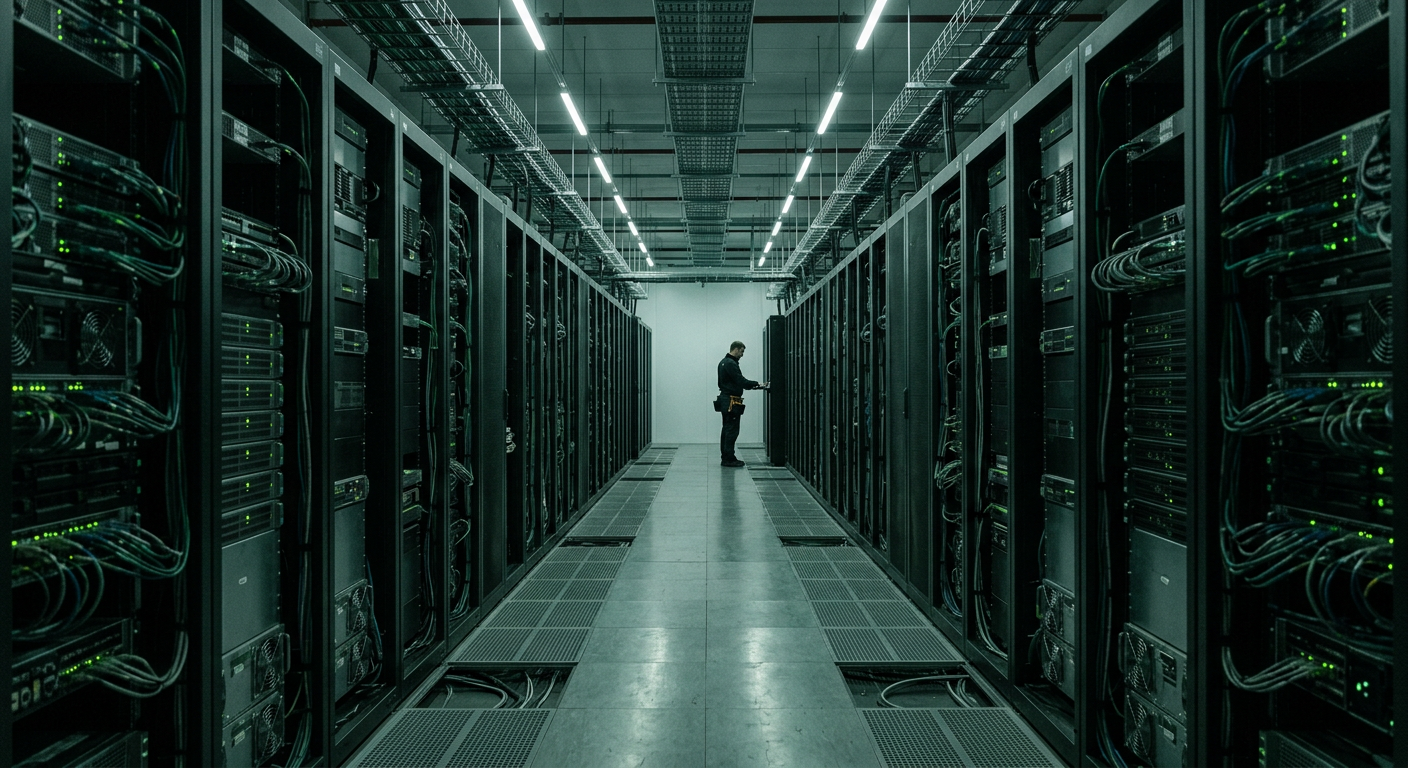
Most writing about artificial intelligence stays at the level of software: what a model can do, which jobs it might affect, how quickly it improves. This explainer goes underneath that. Every request to a large model is answered by a physical machine in a particular building, drawing electricity from a particular grid, cooled by air or liquid, and connected by fibre to the rest of the world. Those machines are made in a small number of factories, using equipment that very few companies can build.
The aim here is to describe that physical stack plainly, layer by layer, and to be precise about what has been measured and what is only projected. Electricity forecasts for data centres in particular change quickly and vary widely between credible studies, so the figures below are dated and attributed to the organisation that produced them.
The building: what a data centre is
A data centre is a building, or a campus of buildings, designed to keep large numbers of computers running continuously. Inside are rows of racks holding servers, storage systems and network switches. Around them is infrastructure most people never see: electrical rooms that step down grid voltage, uninterruptible power supplies that bridge short interruptions, backup generators for longer outages, and cooling equipment that removes the heat every one of those machines produces.
Data centres are not new. They have run email, banking, video streaming and cloud storage for decades. What AI changes is the density and scale of the computing inside them. Training and running large models relies on accelerators, specialised chips such as graphics processing units (GPUs), packed closely together and linked by very fast networks so that thousands of them can work on a single task. Racks of accelerators draw far more power and produce far more heat than racks of conventional servers, and that affects almost every other part of the building.
The International Energy Agency (IEA) notes that AI-focused data centres can draw as much electricity as power-intensive factories such as aluminium smelters, but that they are much more geographically concentrated. In the United States, nearly half of data centre capacity sits in five regional clusters.[1]
Electricity: the measured part and the projected part
The most widely used global baseline comes from the IEA’s Energy and AI report, published in April 2025. It estimates that data centres used around 415 terawatt-hours (TWh) of electricity in 2024, about 1.5% of world electricity consumption. The United States accounted for 45% of that, China for 25% and Europe for 15%. Global data centre consumption had grown by around 12% a year since 2017, more than four times faster than total electricity use.[1]
Those are estimates of the recent past. Projections are a different kind of number. In the IEA’s Base Case, data centre electricity use more than doubles to around 945 TWh by 2030, slightly more than Japan’s total electricity consumption today, with AI the most important driver. By 2035 the Base Case reaches around 1,200 TWh, but the IEA’s own scenarios span from 700 to 1,700 TWh, depending on how quickly AI is adopted and how efficient hardware and models become.[1]
That range deserves to be taken seriously. A projection like this rests on assumptions about chip efficiency, software efficiency, how many announced data centres are actually built, and whether demand for AI services arrives at the scale investors expect. A single headline figure hides that uncertainty.
National estimates show the same pattern of a measured past and a wide projected future. A report produced by Lawrence Berkeley National Laboratory for the US Department of Energy, published in December 2024, estimated that data centres used about 4.4% of total US electricity in 2023, having grown from 58 TWh in 2014 to 176 TWh. It projected 325 to 580 TWh by 2028, roughly 6.7% to 12% of US electricity.[2]
In a smaller country with a dense cluster of facilities, the share can be far higher. Ireland’s Central Statistics Office reported that data centres accounted for 22% of metered electricity consumption in 2024, up from 5% in 2015. That was more than all urban households combined, which used 18%.[3]
In global terms, data centres are still one driver of electricity demand among several. The IEA estimates they account for around one-tenth of global electricity demand growth to 2030. In advanced economies, where electricity demand had been essentially flat for decades, they account for more than 20% of growth.[1]
Grids and transmission: the slowest layer
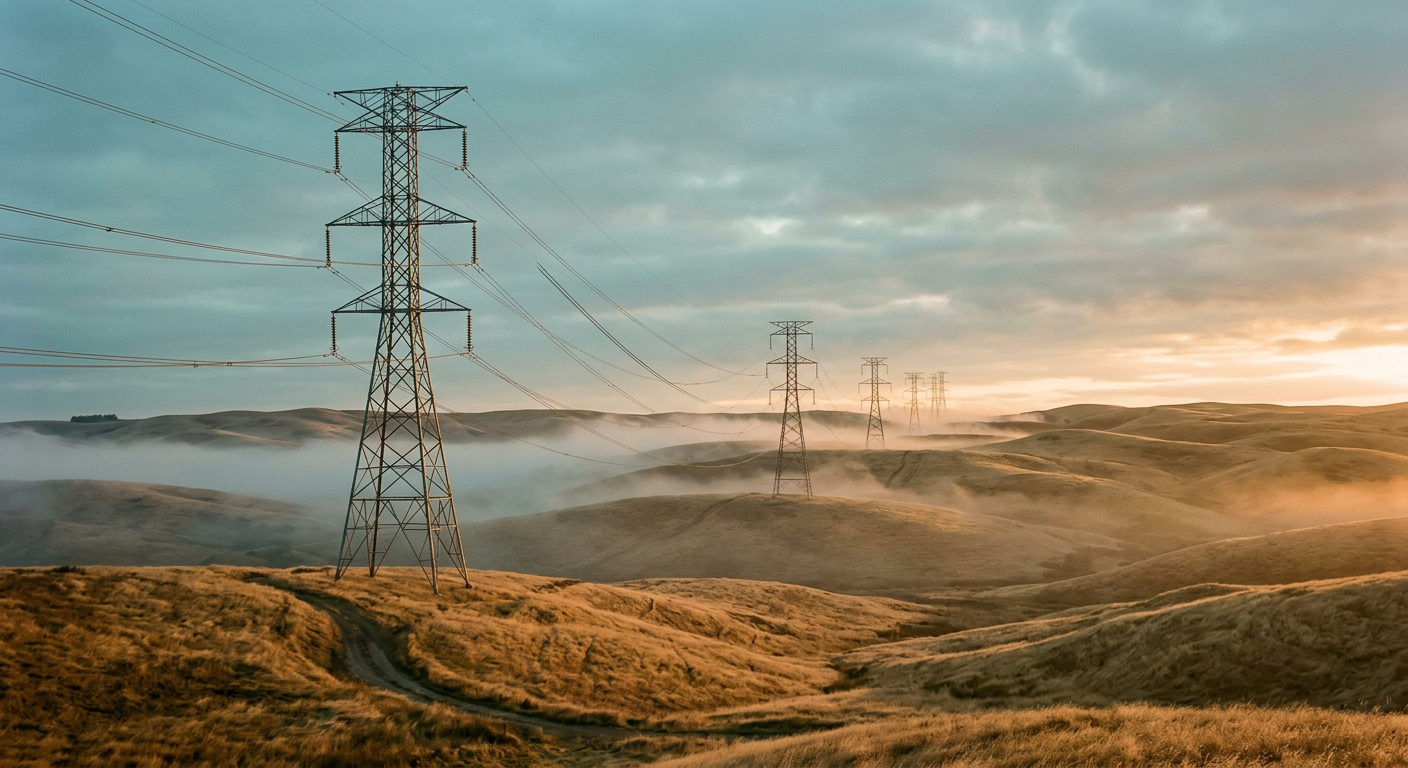
A data centre building can often be finished faster than the grid infrastructure needed to supply it. Connecting a large new load means a utility or grid operator has to confirm that the transmission network can carry the power, that enough generation is available at every hour, and that the new demand will not weaken supply to everyone else on the same network.
The IEA estimates that, unless these risks are addressed, around 20% of planned data centre projects could face delays. It notes long grid connection queues and lead times of several years for new gas-fired power plants. It also finds that half of the data centres under development in the United States are in pre-existing large clusters, which can concentrate the strain on particular local networks.[1]
There are ways to ease that pressure. The IEA points to data centres operating more flexibly, and to grid operators examining incentives to locate new facilities where networks are less constrained. It also estimates that AI-based tools for monitoring and managing transmission lines could unlock up to 175 gigawatts of transmission capacity without any new lines being built.[1]
This is why geography matters so much. Developers look for land with a strong grid connection, reliable and affordable power, access to fibre routes, and a climate and water supply suited to cooling. Those requirements pull data centres into clusters, and clusters are where conflicts over grid capacity, land use and local planning become visible.
Where the electricity comes from
In the IEA’s Base Case, renewables meet about half of the growth in data centre demand to 2035, with generation rising by over 450 TWh, supported by storage and the wider grid. Natural gas expands by 175 TWh, notably in the United States, and nuclear contributes about the same amount, with the first small modular reactors expected to come online around 2030.[1]
These are scenario outcomes, not commitments. The actual mix in any country will depend on national policy, fuel prices, the contracts technology companies sign, and how quickly new plants can be built and connected.
Backup power
Because data centres are expected to run continuously, they are designed not to depend on the grid alone. Batteries in uninterruptible power supplies carry the load for the seconds or minutes after a fault, and on-site generators, commonly diesel, take over during longer outages. This backup capacity is rarely used, but it must be sized for the full load, maintained, tested regularly and permitted by local authorities. That ties data centres into air-quality and fuel-storage rules as well as electricity planning.
Cooling and water
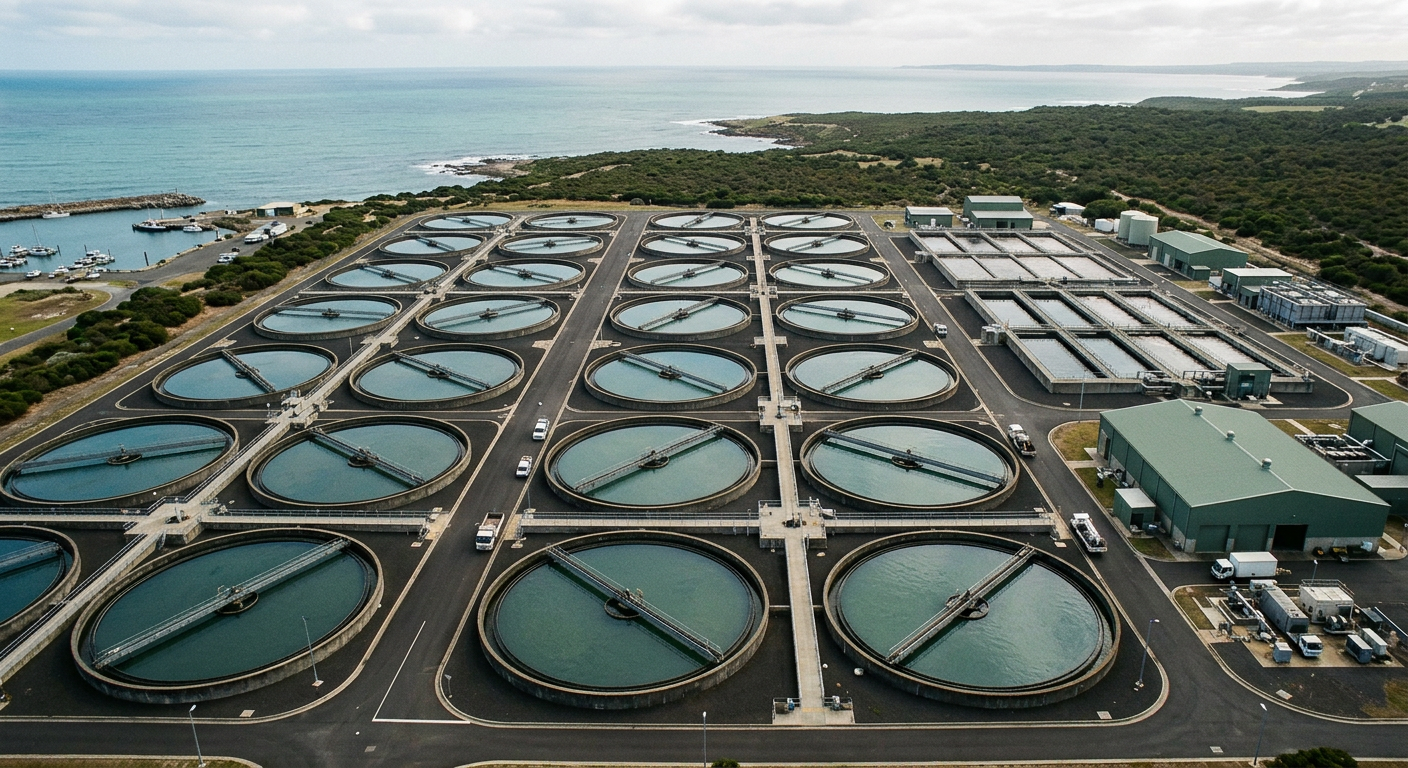
Almost all the electricity a computer uses ends up as heat. Removing it is the job of the cooling system, and the choice of system shapes both energy and water use. Some facilities rely on air cooling and chillers. Others use evaporative cooling, which consumes water but can reduce electricity use. Increasingly, high-density accelerator racks use liquid cooling, piping coolant directly to the chips.
A widely cited paper by Pengfei Li, Jianyi Yang, Mohammad Islam and Shaolei Ren, first released in 2023, proposes accounting for AI’s water footprint in three scopes. Scope 1 is water used on site for cooling. Scope 2 is water consumed off site to generate the electricity the data centre uses. Scope 3 is water used in the supply chain, including chip manufacturing. The authors argue that scope 2 is often overlooked, even though it can be a large share of the total.[4]
The practical point is that water use is local. The same volume matters very differently in a wet region than in one already under drought stress, and a data centre that uses little water on site may still draw on a power system that uses a great deal. Because accounting methods differ, water figures from different operators or studies are not always directly comparable.
The chips and the factories that make them
Accelerators are among the most complex manufactured objects in the world. Their designs come from a small number of companies, and the most advanced versions are produced in an even smaller number of fabrication plants, or fabs, which cost billions of dollars and take years to bring into production.
A 2024 study by the Semiconductor Industry Association and Boston Consulting Group estimated that Taiwan held 69% of the world’s leading-edge logic manufacturing capacity, meaning chips made at process nodes below 10 nanometres, in 2022. It projected that share would fall to 47% by 2032 as more capacity is built elsewhere.[5]
The concentration runs deeper than the factories. The most advanced chips are patterned using extreme ultraviolet (EUV) lithography, machines that use very short-wavelength light to print features onto silicon. ASML, based in the Netherlands, describes EUV as such a challenging and costly pursuit that, in time, only ASML, with its partners and suppliers, continued working toward a viable system. In practice, the most advanced chip factories depend on one equipment maker.[6]
Raw materials are concentrated too. The IEA highlights gallium, a metal increasingly used in cutting-edge chips and power electronics. China accounts for around 99% of global refined gallium supply, and the IEA estimates that data centre demand for gallium could reach over 10% of today’s supply by 2030.[1]
None of this means supply will fail. It means the physical base of AI depends on a handful of places and firms, so a disruption at any one of them, whether a natural disaster, an export restriction or a factory fault, can ripple through the whole chain.
Storage and networks
Models are trained on large datasets that must be stored, copied and served. Data centres therefore hold extensive storage systems alongside their accelerators, and they depend on networks at several levels: very fast links between chips inside a cluster, high-capacity fibre between buildings and between data centres, and the wider internet that carries requests from users.
Between continents, that wider network runs mostly on the seabed. The International Telecommunication Union describes submarine telecom cables as the lifelines of the global digital economy, carrying over 99% of international data exchange. Cables come ashore at landing stations, so their routes are part of the same physical geography as power lines and land.[7]
What changes, and what does not
AI does change the scale and concentration of digital infrastructure. Individual facilities are larger, racks are denser, and electricity demand is arriving faster in particular places than grid planning is used to. It also raises the stakes of supply chains that were already concentrated.
What does not change is the basic dependency. Software still runs on machines that need power, cooling, maintenance and connection. Someone has to build the substation, permit the backup generators, manage the water supply and replace failed components. Those decisions are made locally, by utilities, planners and regulators, often years before the capacity is used.
The IEA also stresses that AI may help the energy system itself, for example by improving forecasts of renewable output and helping locate grid faults, which it estimates could cut outage durations by 30% to 50%. Whether gains like these offset the new demand is one of the open questions its scenarios are designed to explore.[1]
None of this means the infrastructure is inherently good or bad. The same data centres, grids and cables can support useful services or wasteful ones, and the balance depends on decisions about where facilities are built, how they are powered and cooled, and who pays for the networks they rely on. Those decisions are made by utilities, regulators, planners and companies, often far from public view.
For anyone trying to make sense of claims about AI, the physical questions are often the most useful ones to ask. Where is the computing located? Which grid supplies it, and what generates that electricity? How is it cooled, and from which water source? Whose factories and materials does it depend on? Those answers are more concrete, and easier to check, than predictions about what the technology will eventually do.
Sources & Further Reading
- 1.Energy and AI(opens in a new tab)
International Energy Agency, 2025
- 2.DOE Releases New Report Evaluating Increase in Electricity Demand from Data Centers(opens in a new tab)
US Department of Energy, 2024
- 3.Data Centres Metered Electricity Consumption 2024(opens in a new tab)
Central Statistics Office (Ireland), 2025
- 4.
- 5.Emerging Resilience in the Semiconductor Supply Chain(opens in a new tab)
Semiconductor Industry Association and Boston Consulting Group, 2024
- 6.
- 7.Submarine cable resilience(opens in a new tab)
International Telecommunication Union
- Content type
- Explainer
- Author
- It’s Important
- Published
- Reviewed
- Editorial basis
- Research-based editorial
Filed under Technology topic · Energy system · Water system
Spotted an error? Report it to us.