
Bringing Power Beyond the Grid: Kenya’s Off-Grid Solar Project
14 underserved counties, Kenya
Energy
Human Progress
2017–present · implementation ongoing
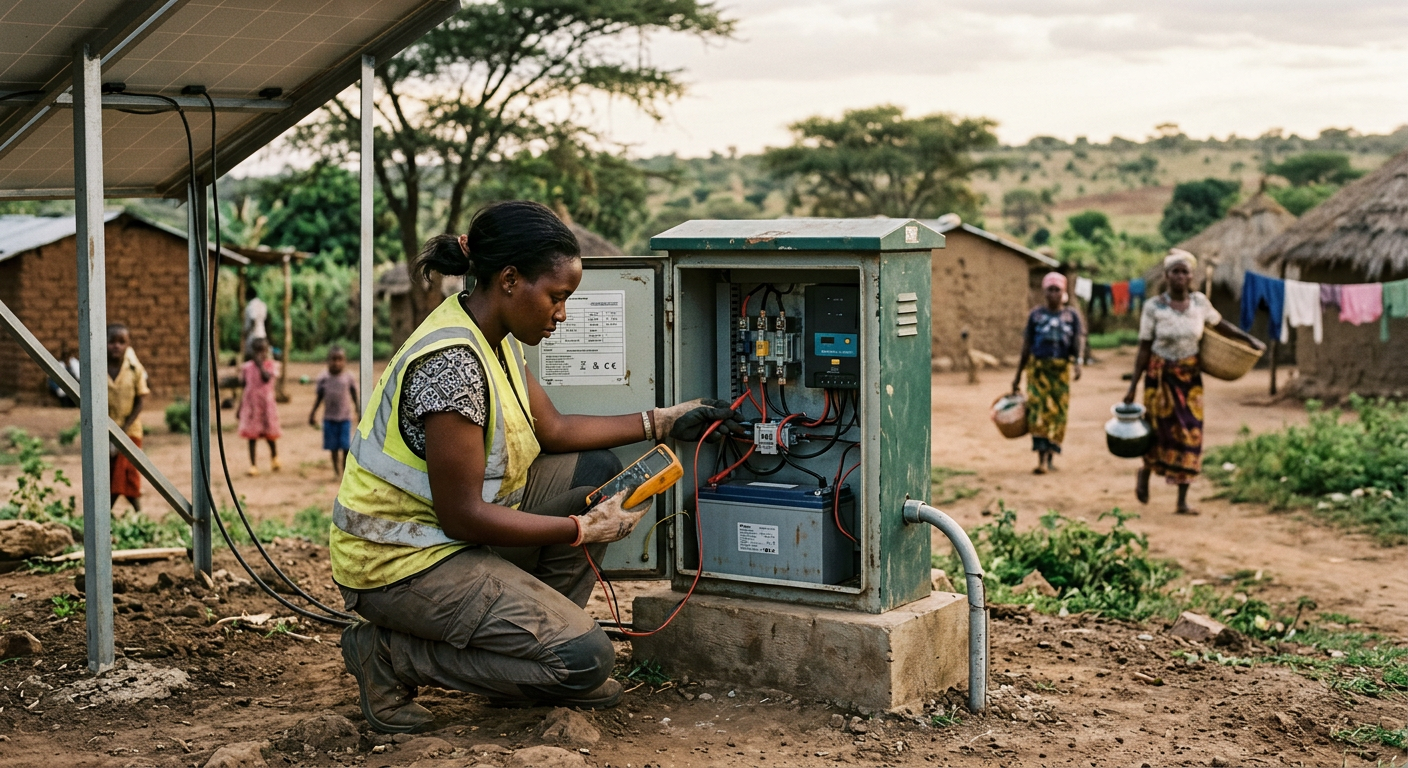
The Kenya Off-Grid Solar Access Project (KOSAP) is a Government of Kenya programme financed by the World Bank to extend modern energy services to 14 underserved, largely arid and sparsely populated counties. It combines solar mini-grids, solar water pumping, systems for public facilities and a market for privately sold solar home systems. It is not finished, and its delays are part of the story.
- 114[1]
- Mini-grids in the original programme target
- 282,611[1]
- Solar home system sales verified (facility dashboard)
Challenge
In much of northern and eastern Kenya, households are spread across very large areas, so extending the national grid line by line is slow and expensive. Off-grid solar can reach these places sooner, but only if equipment is built, paid for and maintained far from suppliers, and if land, permits and community agreements are in place before construction starts.
Approach
The programme’s facilities manager lists the original targets as 114 mini-grids serving about 50,000 households, 250,000 solar home systems, 523 community facilities and 316 boreholes. Mini-grid construction is split between Kenya Power and the Rural Electrification and Renewable Energy Corporation (REREC). REREC told a Senate committee on 4 August 2026 that the overall project is worth US$150 million, of which it implements components worth US$31 million. Solar home systems are sold by private companies, with sales verified before results-based payments; the facilities manager’s dashboard records 282,611 verified sales.
Solution
Implementation has been much slower than planned. According to Kenyan reporting of a National Assembly committee hearing in August 2026, the project began in 2017, was first due to finish in June 2023 and has been extended twice, to September 2026. The Principal Secretary for Energy told MPs that physical progress on the mini-grid component stood at 43 per cent and financial absorption at 24 per cent, and that the ministry had requested a further 12-month extension to September 2027. Causes cited include COVID-19 disruption, slow land acquisition and contractors unable to mobilise; some lots reportedly showed close to zero progress. Separately, REREC said 120 newly built mini-grids would be delivered by 30 September 2026. That count is not directly comparable with the original 114-mini-grid target, as the two figures describe different scopes and stages of the programme. As of this review we could not confirm whether the extension was granted or whether the September commissioning goal was met.
Reviewed . Figures are taken from the sources below as published; images on this page are illustrative, not documentary photographs of the project.
Sources & Further Reading
- 1.Kenya Off-Grid Solar Access Project — Kawi Safi Mashinani(opens in a new tab)
KOSAP Facilities Manager
- 2.
- 3.Kenya Off-Grid Solar Access Project (KOSAP) — Resettlement Policy Framework(opens in a new tab)
Kenya Power and Lighting Company
- 4.Senate committee reviews progress of Kenya Off-Grid Solar Access Project(opens in a new tab)
Parliament of Kenya, 2026
- 5.MPs raise alarm over slow KOSAP project(opens in a new tab)
Kahawa Tungu (via The Horizon Wire), 2026
- 6.
- 7.ESIA Report for Proposed Gatab Solar Mini Grid (KOSAP Lot 4)(opens in a new tab)
Rural Electrification and Renewable Energy Corporation, 2023
Know a projectwe should follow?
Know a story, project, problem or idea that deserves attention? Tell us about it. We welcome suggestions, expertise, partnerships and opportunities to collaborate.
 Established 2026